
UPDATE
In June 2024 the French senate proposed to delay the implementation until 2030 aligning with the EU Packaging (Waste) Regulation. It is expected that Article L541-15-10 of the French Environment Code will be changed accordingly soon.
France has adopted Law 2021-1104 on combating climate change and building resilience to its effects. The final version dated 22 August 2021 contains a whopping 305 articles. The proposals behind this Law were made during the Citizens‘ Convention on Climate that took place in 2019 and 2020.
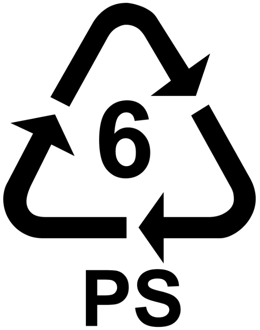
It is just one sentence in the entire comprehensive legal text, but the implications could be far-reaching. Part VI of Article 23 reads as follows „From 1 January 2025, packaging consisting wholly or partly of styrenic polymers or copolymers that cannot be integrated into a recycling chain will be banned.” The sentence has been added as a new paragraph to Article L541-15-10 of the French Environment Code. The ban applies to loose-fill packaging materials (foam peanuts), packaging used for food (such as egg trays), packaging components used to absorb shock and impact during transport, and many more.
Polystyrene takes about 500 years to biodegrade and recycling is limited. It ends up in landfill or as litter, where it fragments into smaller pieces and causes harm to the land and marine environments. Companies selling in France will have to look at alternatives, such as moulded pulp for packaging.
A proposal to remove the (non-)recyclability condition was published on 23 August 2022. The aim was to clarify the ban and effectively address the environmental and health hazards of all polystyrene. The proposal was nuanced in October 2022 to assess the recyclability of such packaging on its capacity to be collected, sorted and transformed into materials that can be used to manufacture products. An implementing decree will follow.
The ban on (expanded) polystyrene remains controversial. Being 98% air and only 2% plastic, it is considered the most efficient of all plastic and paper-based packaging materials. It demands minimal raw materials and energy to produce packaging with excellent protection and insulation properties. It is lightweight, offering advantages in terms of transport costs and the associated carbon footprint.

